Look Up: The Sierra's Dark Skies Are Turning Cabo Into a Stargazer's Secret Weapon
Most people come to Cabo for the water. The sunsets, the surf, the margaritas at golden hour—all completely valid reasons to book that flight. But there's a window of time between when the last colors drain from the western sky and when you fall asleep on a resort pillow that a growing crowd of travelers is treating like its own kind of adventure. That window belongs to the stars.
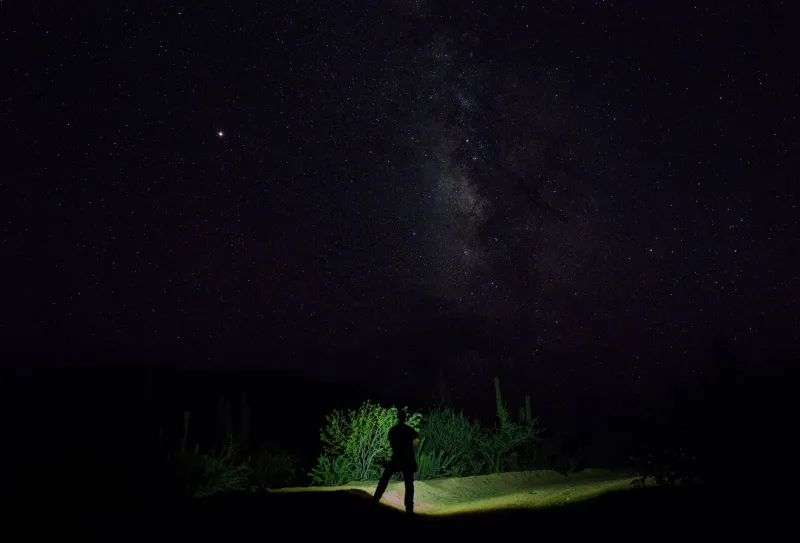
Cabo's reputation as a celestial viewing destination is still relatively young, but it's building fast. And honestly? The geography here was always setting the stage for it. You've got the Sierra de la Laguna range pushing up behind the peninsula, the Pacific on one side, the Sea of Cortez on the other, and a desert landscape in between that just doesn't hold onto light the way cities do. When conditions line up, the sky above Baja California Sur doesn't look like anything you'd see from a backyard in Phoenix or Austin. It looks like something out of a documentary.
Why Cabo's Geography Makes This Work
Here's the thing about light pollution: it travels. Even if you're technically in a rural area, a city glow on the horizon can wash out the fainter stuff—nebulae, satellite galaxies, the kind of detail that makes a night sky go from impressive to genuinely overwhelming. Cabo's layout works against that problem in a surprisingly effective way.
The Sierra de la Laguna acts as a natural barrier, blocking ambient light from inland population centers. Head up into the foothills or find a ridge line with ocean views, and you're essentially looking at darkness on three sides. The humidity here is also lower than you'd expect for a coastal destination, especially from late fall through early spring, which means less atmospheric interference and sharper contrast between stars.
The Milky Way core is visible from Baja during summer months, roughly May through September. But even outside that window, winter skies here deliver Orion in full glory, the Pleiades cluster sharp enough to count individual stars, and on clear nights, the Andromeda Galaxy—a smear of light 2.5 million light-years away—visible to the naked eye if you know where to look.
The Spots That Actually Deliver
Not all dark-sky experiences are created equal, and in Cabo, location is everything. A few areas consistently come up when local guides and astronomy enthusiasts talk about their go-to spots.
The Sierra de la Laguna Biosphere Reserve is the crown jewel. Getting here takes some effort—you're looking at a drive out of Cabo toward Todos Santos, followed by a hike or a guided off-road trip into the reserve itself—but the payoff is real. At elevation, away from any road lighting, the sky opens up in a way that's hard to describe until you've been standing under it. Some local outfitters run overnight trips into the reserve specifically timed around new moon phases and meteor shower peaks.
The stretch of desert between Cabo San Lucas and La Paz offers more accessible options for travelers who don't want to commit to a full overnight expedition. Pull off at the right spot along Highway 1 after dark, get away from your headlights, and give your eyes ten to fifteen minutes to adjust. What comes into focus is often enough to stop a conversation cold.
East Cape, running along the Sea of Cortez side of the peninsula, has become a quiet favorite among repeat visitors. The beaches out here see almost no development, which means almost no light. Combine a night swim in bioluminescent water with a sky full of stars and you're having a Cabo experience that very few people back home are going to believe.
Timing Your Visit Around the Sky
If you're serious about making stargazing a priority, a little planning goes a long way. A few dates and events worth building around:
The Perseid Meteor Shower peaks every year in mid-August. This is one of the most reliable and visually spectacular meteor events of the year, and Baja's summer skies—combined with the Milky Way core still hanging overhead—make for an almost unfair combination. Book accommodations outside the main resort corridor if you can.
The Geminid Meteor Shower in mid-December is actually considered by astronomers to be more prolific than the Perseids, producing up to 120 meteors per hour at peak. December in Cabo also means lower humidity, cooler desert temperatures, and the kind of crisp air that makes stars look like they're sitting right on top of you.
New moon weekends throughout the year are worth tracking regardless of specific events. The new moon phase eliminates the single biggest source of natural light interference, and even a standard night sky in Cabo without any special meteor activity is worth staying up for.
Apps like Stellarium and SkySafari are free, easy to use, and will show you exactly what's overhead on any given night before you even leave home. Spending twenty minutes with one of these before your trip genuinely changes the experience.
Going Out With a Guide
You don't have to know anything about astronomy to have a great night under Cabo's skies—but going out with someone who does takes things to a different level entirely. A handful of local operators have started offering dedicated stargazing excursions, typically pairing transportation to a remote vantage point with telescopes, laser pointer constellation tours, and the kind of off-the-cuff cosmic storytelling that makes the whole thing feel less like a lesson and more like a late-night conversation.
These tours tend to run two to three hours, often starting around 9 or 10 PM after the horizon has fully darkened. Some operators work through resorts; others operate independently and can be booked directly. If you're traveling with kids, this is genuinely one of the best ways to pull them away from screens—something about seeing Saturn's rings through an actual telescope tends to do the trick.
Ask your hotel concierge, check local Facebook groups for expats and visitors in the Los Cabos area, or look for listings on activity booking platforms that feature Baja-specific experiences. The scene is still small enough that word-of-mouth recommendations carry real weight.
A Different Kind of Cabo Night
There's a version of a Cabo trip that starts with a day on the water, moves into a long dinner somewhere with good fish tacos and better mezcal, and ends with your neck craned back staring at a sky full of stars from a quiet patch of desert. That version of the trip exists, it's not hard to pull off, and it tends to be the one people talk about longest after they get home.
The beach and the party will always be here. But some nights, the most spectacular thing in Cabo isn't at sea level at all.