When the Humpbacks Hit the Cape: A Practical Guide to Cabo's 2026-27 Whale Season
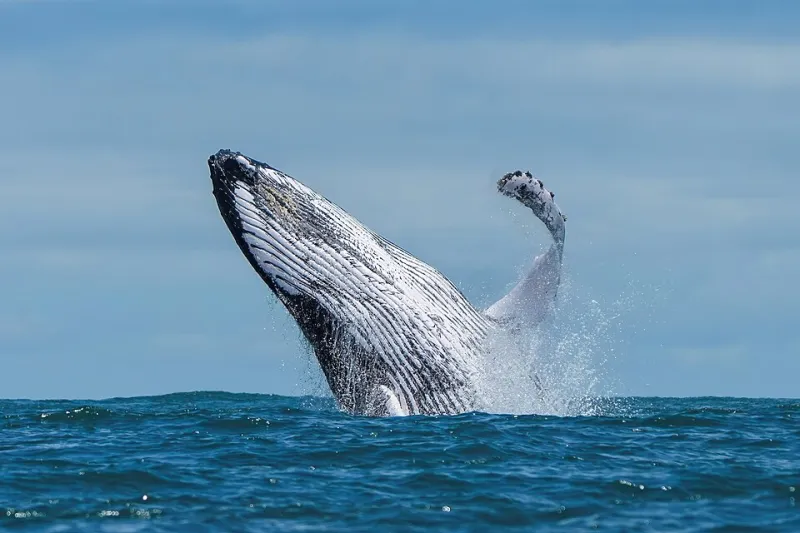
Photo: Giles Laurent, CC BY-SA 4.0, via Wikimedia Commons
The whales do not read calendars, but they keep a schedule that is close enough for trip planning. By late November, early humpbacks have usually started to trickle past Cabo San Lucas. The reliable stretch of the 2026-27 season runs from December into April, with the densest activity — and the best odds for a memorable boat day — landing between late January and mid-March.
Cabo sits at the tip of Baja California Sur, where the Pacific meets the Sea of Cortez. That geography makes it a corridor rather than a nursery lagoon. You are not guaranteed a close encounter. You are guaranteed a shot at one, plus a winter coastline that feels far quieter and more dramatic than the brochure version of Cabo.
What Actually Shows Up, and When
Humpbacks are the headliners. They travel from feeding grounds off California and Alaska to breed and calve in Mexican waters, and Cabo sits along the route. December and early January are warm-up acts. February and March are the main event. April can still deliver, especially early in the month, but the numbers taper as the season winds down.
Gray whales are the other big story, though their best theater is not in Cabo proper. They hug the Pacific side on their way to the lagoons of Baja's west coast. You can spot migrants from high points and from boats, but if gray whales are your must-see, plan a long day or an overnight to Magdalena Bay rather than expecting a marina-side show. Cabo is a great base for humpbacks. It is a gateway, not the final destination, for gray whales.
Shore vs. Boat: Two Very Different Whale Trips
Shore watching is the underrated option. The Pedregal cliffs, Playa Solmar, and the Land's End area give you a front-row seat to open water without a ticket. Bring binoculars, patience, and a windbreaker. Mornings are usually calmer and the light is better for spotting blows. A spout on the horizon is a thrill; a full breach is a bonus. Do not expect theme-park proximity.
Boat trips range from two-hour pangas to half-day catamarans and sailboats. The best trips are small, quiet, and run by crews who cut the engine rather than chase. You want a licensed operator with life jackets, a clear safety briefing, and a realistic attitude. If a company promises you will touch a whale, walk away. If it guarantees a close encounter, keep walking.
How to Pick a Responsible Operator
Ask three questions before you book. How many passengers per boat? What is the policy on approach and engine use? What happens if weather turns? The answers tell you more than a glossy brochure. Mexican whale-watching rules set distance and behavior standards, but enforcement and habits vary. A good crew will keep its distance, limit time with any single animal, and let the whale choose the interaction.
Book directly when you can, or use a hotel concierge you trust. Morning departures often mean calmer seas and better light. If you are prone to motion sickness, take medication the night before and again in the morning, and eat something bland. A whale trip is not the day to test your sea legs on an empty stomach.
Build the Trip Around the Whales Without Losing the Beach
Five nights is a comfortable winter whale itinerary. Arrive, settle in, and eat in town. Book your whale trip for the second morning, which leaves room to reschedule if the wind picks up. Spend the afternoon at Medano Beach or in the marina, then keep dinner low-key. Day three can be a Sea of Cortez beach day at Santa María or Chileno Bay. Day four is San José del Cabo: gallery walk, lunch, and a slower pace. Day five is your buffer — a second whale trip, a surf lesson, or a nothing day.
The key is to book the whale trip early in the stay. Winter weather can be breezy, and boats do cancel. A day-two booking gives you options. Stay near the marina if you want an easy morning departure, or in the corridor if you want resort quiet and beach access. Whale season overlaps with high season, so lodging and popular boats fill up. Holiday weekends and Valentine's week are especially busy.
The Etiquette That Makes a Difference
Keep your voice down. Do not crowd the rail. Skip the drone. Wear polarized sunglasses so you can see below the surface. Bring layers, because a winter morning on the water can be cool even when the afternoon beach is warm. And remember that a quiet, respectful boat often sees more than a loud one. The whales are not performing for you. That is exactly why it works.
Cabo in whale season is not just a warmer version of summer. It is a different trip: breezier, wilder, and a little less predictable. Build in slack, choose your operator carefully, and let the ocean set the schedule. The payoff is a winter coastline with a pulse.