Jacques Cousteau Called It the World's Aquarium — Here's What That Actually Means for Your Cabo Trip
Most people fly into Los Cabos thinking about the Pacific. The crashing waves, the famous arch, the sunsets that turn the sky into something embarrassing for phone cameras. And all of that is real. But there's another body of water sitting just to the northeast that quietly outranks almost every ocean destination on earth — and most visitors never really engage with it.
The Sea of Cortez. Also called the Gulf of California. Jacques Cousteau, who spent a good chunk of his career chasing extraordinary underwater environments, called it "the world's aquarium." That wasn't poetry. It was a scientific assessment from one of the most experienced ocean explorers who ever lived.
So what's actually going on in that water — and how do you get into it?
Why the Sea of Cortez Is Biologically Unusual
The short version: geography created a freak accident of ecology.
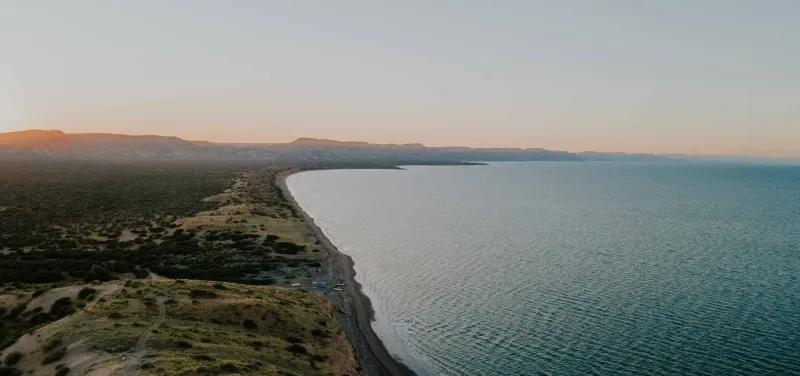
The Sea of Cortez is essentially a long, narrow inlet — about 700 miles from tip to tip — formed when the Baja California Peninsula broke away from the Mexican mainland roughly five million years ago. That separation created an enclosed, semi-isolated body of water with its own tidal rhythms, nutrient cycles, and temperature dynamics.
The result is a system that supports around 900 fish species, more than 30 species of marine mammals, 180 species of seabirds, and thousands of invertebrate species. Roughly 90 of those fish species exist nowhere else on earth. The tidal variation in the northern section of the sea can reach 30 feet — one of the highest tidal ranges on the planet — which churns up nutrients from the seafloor and feeds an entire food chain that starts microscopic and ends with blue whales.
Blue whales. The largest animals that have ever existed on earth. They come here to feed.
UNESCO designated the Islands and Protected Areas of the Gulf of California as a World Heritage Site in 2005, specifically citing the sea's "extraordinary biodiversity." This isn't marketing language. It's a formal recognition that what happens in this water is genuinely rare.
What You Can Actually See from Cabo
Cabo San Lucas sits at the very tip of the peninsula, where the Sea of Cortez and the Pacific technically meet. That position makes it an ideal launching point for marine encounters that would require expedition-level planning almost anywhere else.
Whale sharks are probably the most popular target, and for good reason. These filter-feeding giants — the largest fish species alive — gather in the warmer waters of the Sea of Cortez, particularly between October and May. Several operators run snorkel tours out of La Paz (about two hours north) where you can swim alongside animals that can stretch 30 to 40 feet. They don't bite. They don't care about you, honestly. You're just floating next to something ancient and enormous, and it's one of those experiences that doesn't fully process until you're back on the boat.
Humpback and blue whales move through the corridor between November and April. Blue whale sightings in the Sea of Cortez are more reliable than almost anywhere on the planet — these animals come specifically to feed in the nutrient-rich waters, and they're not shy about surfacing. Watching a blue whale exhale from a panga boat at sunrise, with the desert hills of Baja in the background, is the kind of thing that makes the rest of your trip feel like a warm-up.
Mobula rays — sometimes called devil rays — school in the Sea of Cortez in numbers that genuinely don't look real. Thousands of them. They breach the surface repeatedly, spinning in the air before slapping back down. Scientists still debate exactly why they do it. You don't need to know why to understand that seeing it from a boat is extraordinary.
Sea lions are practically a given. The Los Islotes sea lion colony near La Paz is one of the most accessible in the world, and the animals there have no fear of snorkelers — juveniles will swim directly at your mask, curious and fast.
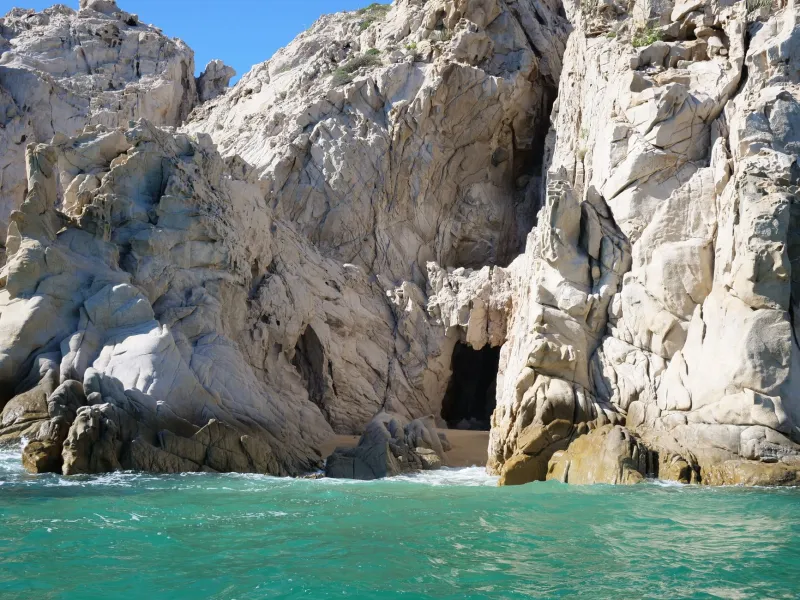
Closer to Cabo itself, the waters around Land's End and the nearby seamounts offer strong diving for hammerhead sharks (seasonal), manta rays, and the kind of reef diversity that keeps serious divers coming back year after year.
The Conservation Context You Should Know
This sea is under pressure. Overfishing, illegal totoaba poaching, and bycatch from commercial operations have damaged populations of species that exist nowhere else. The vaquita porpoise — endemic to the northern Sea of Cortez — is functionally extinct, with fewer than ten individuals thought to remain. That's not a distant conservation story. It happened in a sea that's geologically young, ecologically extraordinary, and still recoverable in most of its range.
When you book tours in this region, it matters who you book with. Operators certified through Mexico's environmental agencies and affiliated with organizations like Pelagic Life or the Intercultural Center for the Study of Deserts and Oceans (CEDO) funnel money into science and enforcement. Your tourist dollars are literally part of the conservation mechanism here.
Ask your operator about their practices. Do they maintain distance protocols with whale sharks? Do they work with local fishing communities on alternative livelihoods? The good ones will have answers.
How to Build a Sea of Cortez Day from Cabo
The most efficient approach is to combine a day trip to La Paz with your Cabo stay. The drive up MEX-1 takes about two hours and passes through some of the most dramatic desert-meets-coast scenery in North America. La Paz is a genuinely wonderful town — calmer than Cabo, with a waterfront malecón that's perfect for an evening walk — and it's the departure point for most of the best marine tours.
Alternatively, several Cabo-based operators run full-day excursions into the Sea of Cortez from the marina, hitting snorkel sites, sea lion colonies, and sometimes whale-watching depending on the season. These tend to be less specialized than La Paz operators but are solid options if you're short on time.
Either way, bring reef-safe sunscreen. The Sea of Cortez's coral systems are sensitive, and conventional sunscreens contain chemicals that damage coral DNA. Mineral-based options are widely available in Cabo, and most responsible operators require them.
The Bigger Picture
Cabo's identity is built on where the desert meets the sea — and that's literally true here in a way that goes deeper than scenery. The Sonoran Desert's aridity creates the conditions that make the Sea of Cortez so productive. Dry air means less cloud cover, which means intense solar heating of surface water, which drives the upwelling cycles that feed everything from sardines to blue whales.
You're not just visiting a pretty coastline. You're standing at the edge of one of the most ecologically consequential intersections on earth. The fact that you can snorkel with whale sharks in the morning and eat fish tacos at a harbor-side palapa by noon is just a bonus.