Golden Hour at Land's End: What Cabo's Sunsets Are Actually Doing to Your Body
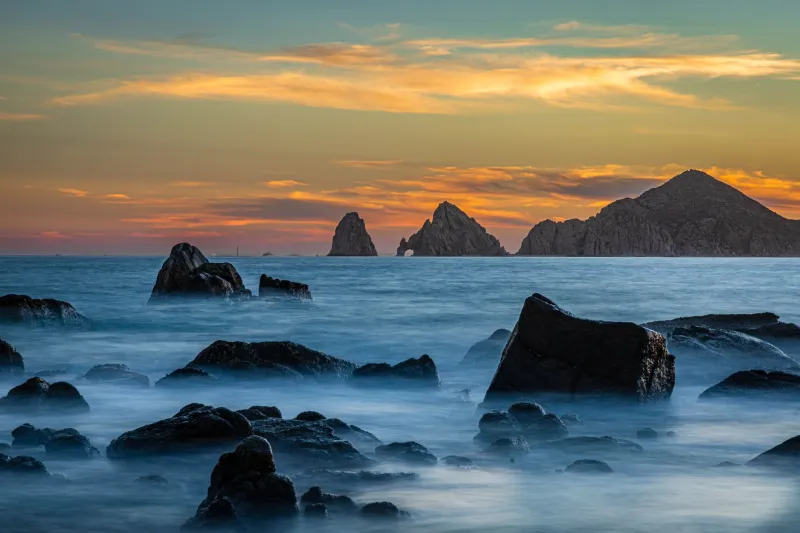
You've probably stood at the edge of the Pacific, drink in hand, watching the sky above Cabo San Lucas melt from gold to amber to a deep, bruised violet — and thought to yourself, why does this feel so different? Not just beautiful. Different. Like something in your chest physically loosens.
Turns out, that feeling isn't just vacation brain. There's actual science behind why Cabo's sunsets hit harder than the ones you catch from your apartment balcony back home — or even from other beach destinations you've visited. The geography here, where the Sonoran Desert drops straight into the Sea of Cortez and the Pacific Ocean, creates atmospheric conditions that produce a specific quality of light. And that light? It's doing something measurable to your nervous system.
Why Cabo's Light Is Genuinely Different
Start with the basics. Cabo San Lucas sits at the southern tip of the Baja California Peninsula, right at the confluence of two major bodies of water. That dual-ocean position matters more than you'd think. As the sun descends toward the Pacific horizon, it passes through a layer of air that carries moisture from both the Sea of Cortez to the east and the open Pacific to the west — but it's also filtered through decades of desert particulate: fine dust, dried salt, and trace minerals kicked up from the surrounding Sonoran landscape.
This combination scatters shorter blue and green wavelengths more aggressively than in purely humid coastal climates, which means the longer red and orange wavelengths dominate Cabo's golden hour far more intensely than they would in, say, Miami or Malibu. The result is a warmer, deeper, more saturated light spectrum. And warmer light wavelengths — particularly in the amber-to-red range — have a documented effect on human physiology.
Exposure to low-angle, red-spectrum light in the evening signals to your brain that the day is ending. It triggers a gradual suppression of cortisol (your primary stress hormone) and begins nudging melatonin production into gear. In other words, watching a Cabo sunset isn't just relaxing in the way a good meal is relaxing. It's relaxing in the way a carefully calibrated wind-down routine is relaxing. Your nervous system is literally receiving a signal to downshift.
The Desert-Sea Interface Effect
What makes Cabo's version of this phenomenon particularly potent is the thermal contrast at the desert-sea boundary. During the day, the desert absorbs an enormous amount of heat. As the sun drops, that stored heat radiates upward, creating a layer of warm, slightly turbulent air just above the coastline. When light passes through that thermal layer at a low angle, it bends and scatters in ways that amplify the color saturation even further.
Local photographers and longtime Cabo regulars will tell you the light here has a quality they can't quite replicate anywhere else — that the colors seem almost artificially vivid, like someone turned up the saturation slider in post-production. That's not hyperbole. It's physics.
The Sea of Cortez — famously called "the world's aquarium" by Jacques Cousteau — also plays a role. Its relatively shallow, warm waters reflect and refract light differently than the deep open Pacific, adding a luminous quality to the eastern sky just as the western horizon ignites. On a clear evening, you're essentially surrounded by color. It's immersive in a way that few natural environments can match.
When to Be There and Where to Stand
Timing matters. Cabo's golden hour typically runs about 45 to 60 minutes before sunset, though the most physiologically potent window — when that red-spectrum light is most concentrated — is the final 20 minutes before the sun touches the horizon.
For the full effect, position yourself somewhere with an unobstructed western view. A few spots consistently deliver:
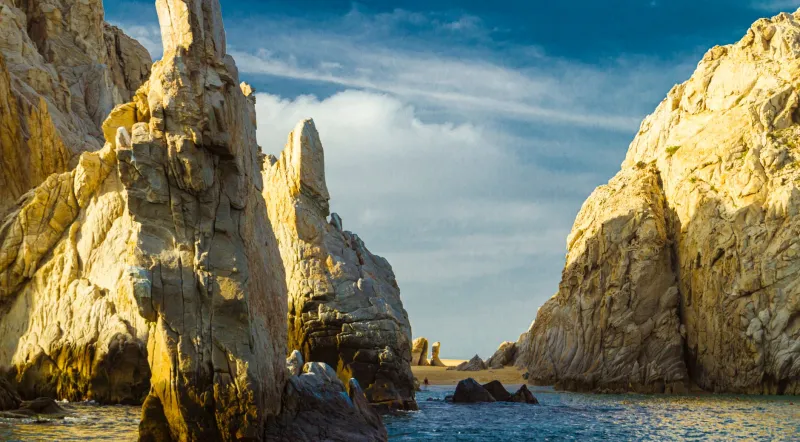
Lands End (El Arco area): Being on the water near the famous arch puts you at the absolute tip of the peninsula, where both oceans meet. Sunset boat cruises that anchor near El Arco during golden hour are genuinely worth it — not just for the photo ops, but because being on the water means the light wraps around you from multiple directions.
Médano Beach: Accessible and social, with the added benefit of beach bars that let you settle in without rushing. The slightly elevated vantage from some of the open-air terraces along the beachfront gives you a clean sightline to the horizon.
The rooftop scene downtown: Several restaurants and bars along the marina have rooftop access that frames both the sunset and the marina lights coming up in the background. The layered visual context — desert hills, water, sky — amplifies the whole experience.
Lover's Beach (Playa del Amor): Accessible only by water taxi, this beach sits between the Pacific and the Sea of Cortez, which means you catch the sunset on one side and watch the warm eastern glow fade on the other. Quieter than Médano and worth the short boat ride.
Rituals That Amplify the Effect
Here's where travel science gets genuinely practical. If the goal is to let Cabo's golden hour do its full physiological work, a few simple habits make a real difference.
Put the phone down — or at least flip it. Screen light, even when you're pointing your camera at a sunset, introduces blue-spectrum wavelengths that partially counteract the calming effect of the ambient light around you. Take your photos, sure, but then pocket the phone and just look. Your eyes need unmediated exposure to that warm light for the nervous system response to fully register.
Get horizontal if you can. Lying on the beach or reclining in a beach chair lowers your visual horizon, which means the sky takes up more of your field of vision. More sky, more light input, stronger effect.
Slow your breathing deliberately. The nervous system shift that golden hour initiates is amplified by intentional slow breathing — four counts in, six counts out. It sounds almost too simple, but pairing the physiological cue from the light with a conscious parasympathetic trigger compounds the relaxation response significantly.
Skip the cocktail for the first 15 minutes. Alcohol is a vasodilator and a mood modifier, and while a sunset margarita is one of life's genuine pleasures, having it during the peak light window means you're blurring the sensory experience with a chemical one. Let the sunset land first. Then celebrate.
The Bigger Picture
There's something quietly profound about the fact that one of the most physiologically restorative experiences available to you on a Cabo vacation is also completely free, happens every single day, and requires nothing but your presence and a willingness to look west.
Cabo has no shortage of things to do, spend money on, or check off a list. But the sunset — that specific, scientifically distinct, desert-filtered, dual-ocean-amplified golden hour — is the thing that people who've been coming here for years keep mentioning when you ask them why they keep coming back.
It's not just that it's beautiful. It's that it makes you feel, in a way that's hard to articulate until you've experienced it, genuinely okay. Reset. Like your nervous system got a firmware update you didn't know it needed.
That's worth showing up for. Every single evening.