Why Your Brain Needs Cabo More Than Another Productivity Hack
You've downloaded the meditation apps. You've tried the cold plunges. You've blocked off Sunday mornings and called them "sacred." And still, somewhere around Tuesday afternoon, the low-grade hum of anxiety is back, right on schedule.
Here's something nobody in the wellness industry is going to sell you a subscription for: sometimes the most effective reset isn't a routine. It's a place. Specifically, it's a place where the midday sun makes hurrying feel genuinely absurd, where dinner doesn't start until 9 p.m., and where the gap between the desert and the sea creates a sensory environment your nervous system has been quietly craving for years.
Welcome to Cabo San Lucas—where the siesta isn't a quaint cultural artifact. It's neurological medicine.
The Science of Slowing Down
Let's start with what chronic stress actually does to the body. When you're operating in a state of sustained low-level urgency—the default mode for most American professionals—your sympathetic nervous system stays partially activated. Cortisol levels remain elevated. Your brain's prefrontal cortex, the part responsible for creative thinking and emotional regulation, gets progressively crowded out by the amygdala, which is essentially your threat-detection alarm system.
In plain terms: you get worse at thinking, worse at feeling good, and worse at being present. And no amount of weekend downtime fully reverses it, because you're still embedded in the same environmental cues that triggered the stress response in the first place.
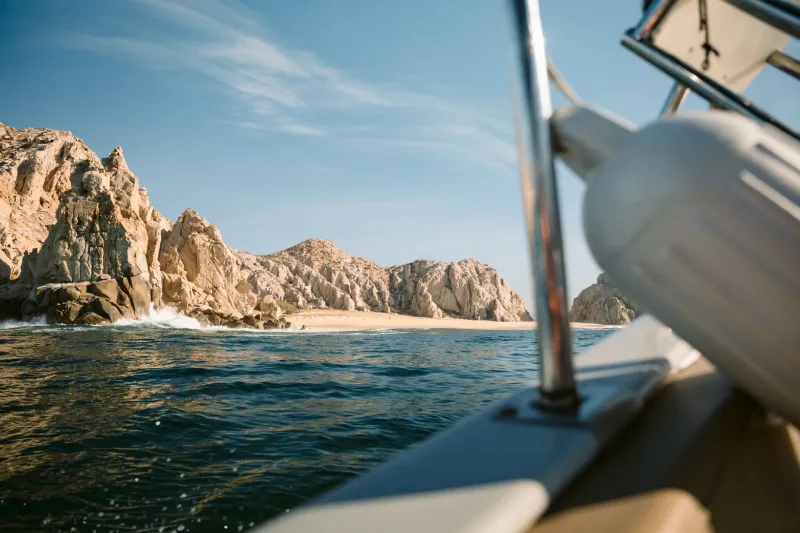
This is where Cabo's geography becomes surprisingly relevant. Research on what scientists call "environmental restorative theory" suggests that natural landscapes—particularly those combining water, warmth, and open horizons—actively engage the parasympathetic nervous system, your body's rest-and-repair mode. The Sea of Cortez on one side. The Pacific on the other. Desert light that turns golden by late afternoon. Cabo isn't just pretty. It's physiologically disarming.
The Midday Pause Is Not Laziness
Ask anyone who's spent real time in Cabo—not just a long weekend at an all-inclusive—and they'll tell you about the strange magic of the midday hours. Between roughly noon and three, the heat settles in and the pace of the town shifts almost imperceptibly. Shopkeepers slow down. Locals find shade. Even the most ambitious tourists tend to drift back toward a pool or a hammock.
Americans are conditioned to feel guilty about this. We call it "wasting the day." But Dr. Valentina Reyes, a wellness consultant based in San José del Cabo who works with both Mexican locals and visiting clients, sees it differently.
"The body has its own intelligence about rest," she says. "When you stop fighting the heat and actually surrender to the afternoon pause, something shifts. People tell me it's the first time in years they've felt genuinely still. Not bored. Not scrolling. Actually still."
That stillness, she explains, is the parasympathetic system finally getting a word in. Heart rate drops. Muscle tension releases. The brain starts consolidating memories and processing emotions—work it never gets to do when you're constantly in motion.
Dinner at Nine and Why It Changes Everything
If the midday pause is the first disruption to your stressed American schedule, the late dinner culture is the second—and arguably the more transformative one.
Back home, dinner is often a transaction. You eat at 6:30 because that's when the kids need to be fed, or because you have to be up at 5:45, or because the restaurant only holds your reservation until 7. The meal is squeezed between obligations.
In Cabo, dinner is an event. Restaurants fill up around 8 or 9 in the evening. Tables linger. Conversations stretch. The meal isn't a checkpoint—it's the destination.
Marco Sandoval, a long-term American expat who moved to Cabo from Chicago seven years ago and now leads group wellness retreats in the area, describes the shift as a reordering of priorities. "Back home, I ate to fuel the next thing," he says. "Here, the meal is the thing. You stop treating time like a resource you're burning through and start treating it like something you're actually living in."
Neurologically, this matters. Eating in a relaxed state—without the cortisol spike of a rushed meal—improves digestion, yes, but it also reinforces a broader signal to the nervous system that there is no emergency. Done consistently over several days, that signal starts to recalibrate your baseline.
The Desert Does Something to You
Cabo's landscape is part of the equation in a way that's easy to overlook if you spend your whole trip poolside. The Baja desert—all sun-bleached rock, towering cardón cacti, and silence broken only by wind—has a particular quality that long-term visitors describe as clarifying.
There's emerging research to support this intuition. Studies on "awe experiences"—moments when we encounter something vast enough to temporarily dissolve our sense of self-importance—show measurable reductions in inflammatory markers and a significant uptick in prosocial behavior and feelings of connectedness. The desert, with its scale and its indifference to human schedules, is an awe machine.
"Patients who come here for a week and actually spend time in the desert, not just on the beach, come back fundamentally different," says Dr. Reyes. "There's a humility that sets in. The nervous system stops treating every inconvenience as a crisis."
What Happens When You Get Home
Here's the part that surprises most people: the benefits don't necessarily vanish the moment you land back in Phoenix or Denver or New York.
Sandoval has tracked this informally with the retreat participants he works with. "The ones who really surrendered to the pace—who didn't spend the whole trip answering emails and optimizing their beach time—come back changed in a way that lasts," he says. "Not forever, but for weeks. Sometimes months."
Neuroscience offers a possible explanation. Experiences that generate strong parasympathetic activation and emotional salience—genuine rest, awe, connection—tend to create lasting changes in neural pathways. Your brain, in other words, remembers what it felt like to be calm. And it becomes slightly easier to find that state again.
The key, both experts emphasize, is actually letting Cabo do its job. That means resisting the urge to pack the itinerary. It means eating late and sleeping in and sitting with the heat for a few hours instead of scheduling another activity. It means treating the siesta not as dead time but as the whole point.
You Don't Have to Earn the Rest
American travel culture has a complicated relationship with stillness. We tend to justify vacation by how much we did—the hikes completed, the restaurants checked off, the sunrises witnessed. Cabo will absolutely reward that energy if you bring it. The adventures here are real and worth chasing.
But the deeper gift this place offers is something different. It's the permission—built into the architecture of the culture, the climate, and the pace of daily life—to simply stop. To let the heat make the decision for you. To eat when the town eats, rest when the sun says rest, and trust that doing less for a week might be the most productive thing you do all year.
Your nervous system already knows this. It's been waiting for you to figure it out.
Cabo's just the place where it finally gets to say so.