The Secret Weapon Hiding in Your Cabo Vacation: How Doing Nothing Down Here Makes You Sharper Back Home
You've heard the pitch before. Take a break to perform better. Rest to work harder. It sounds like something a life coach prints on a motivational poster, and most of us scroll right past it. But here's the thing: there's a version of that idea that's actually backed by neuroscience — and it has a very specific zip code.
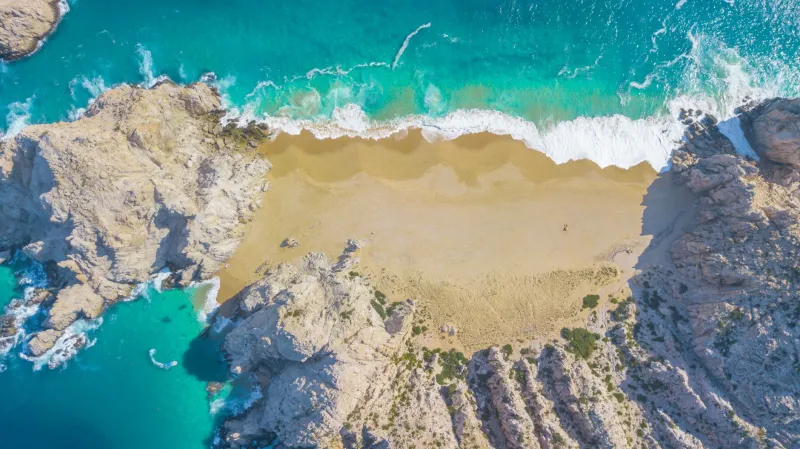
Cabo San Lucas, where the Sonoran Desert runs out of real estate and drops straight into the Sea of Cortez, turns out to be one of the more unusual environments on the planet for resetting the human brain. Not because of its resorts or its margaritas (though those don't hurt). Because of what its particular combination of geography, heat, light, and sound does to your nervous system when you stop fighting it.
Your Brain on Overstimulation — and Why It Matters
Most American workers arrive in Cabo carrying a full load. Slack notifications mentally queued. Email anxiety baked in. The low-grade hum of chronic cognitive demand that's become so normal we've stopped noticing it. Neuroscientists call the result directed attention fatigue — a state where the prefrontal cortex, the part of your brain responsible for focus, decision-making, and creative problem-solving, is essentially running on fumes.
Dr. Rachel Kaplan and Stephen Kaplan's Attention Restoration Theory, developed at the University of Michigan, argues that natural environments are uniquely capable of replenishing this depleted resource. But not all natural environments are created equal. The Kaplans identified four conditions that make restoration stick: a sense of being away, a feeling of extent (environments rich enough to occupy the mind without effort), fascination (effortless, involuntary attention), and compatibility with what you actually want to do.
Cabo checks every single box — and then adds a few of its own.
Why the Desert Does Something Different
Here's where Cabo gets interesting. Most vacation destinations lean hard on one sensory experience. Beach towns give you ocean. Mountain retreats give you altitude and pine. Cabo gives you both, layered on top of each other in a way that keeps your brain in a constant low-level state of gentle surprise.
The desert heat is the first thing you notice. It's not aggressive the way Phoenix heat is — it's dry, enveloping, and oddly quieting. Research on thermal environments suggests that moderate heat exposure slows cognitive tempo naturally, reducing the rapid-fire internal monologue that most of us mistake for productivity. Your body gets warm, your thoughts get slower, and something in your chest loosens up.
Then the ocean breeze comes through.
It's not dramatic. It doesn't announce itself. But negative ion concentrations near the coastline — particularly along exposed points like Land's End — have been associated in multiple studies with improved mood, reduced anxiety, and enhanced serotonin levels. The combination of desert warmth and coastal air creates a kind of alternating sensory rhythm that your nervous system apparently finds deeply regulating.
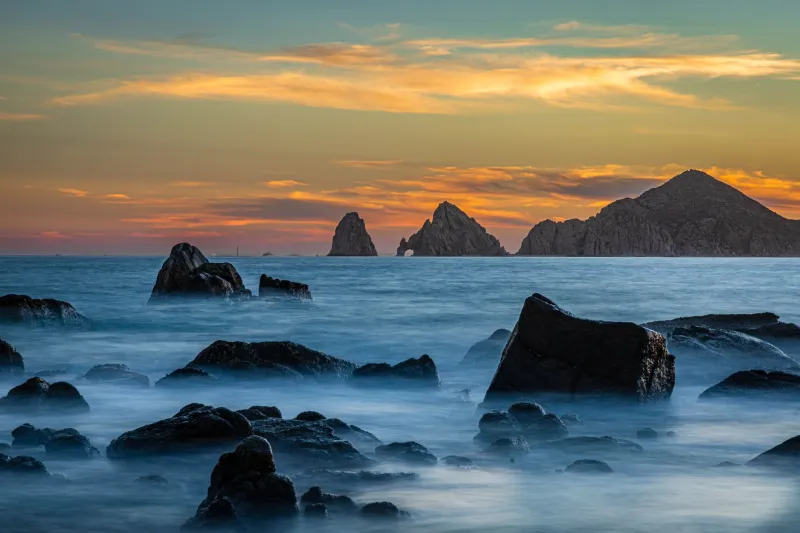
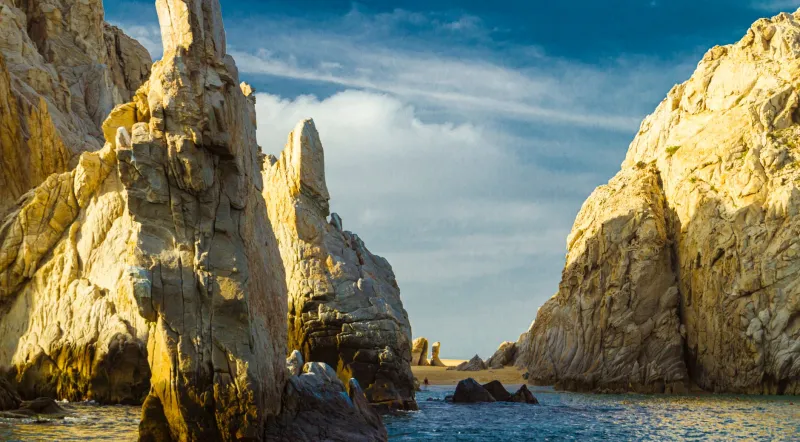
Add to that the visual landscape: the dramatic arch of El Arco, the contrast of rust-colored rock against impossibly blue water, the way the light changes color at different hours of the day. These aren't just pretty. They're what researchers call soft fascination triggers — stimuli that hold your attention without demanding it, which is precisely the condition your prefrontal cortex needs to start repairing itself.
What Returning Visitors Actually Report
Talk to people who've been to Cabo more than once and you start to hear a pattern. Not just "I felt relaxed," but something more specific. A sharpness in the first week back. An unusual patience with problems that would normally frustrate them. Ideas arriving in the shower, on the drive to work, in the middle of mundane tasks.
Jamie, a marketing director from Austin who's made Cabo a semi-annual habit, describes it this way: "I come back and I'm just... clearer. Like someone cleaned the lens. I'm not rushing through decisions. I'm actually thinking."
Productivity researchers have a framework for this. The Default Mode Network — the brain system that activates during rest, mind-wandering, and daydreaming — is now understood to be essential for creative synthesis, long-term planning, and emotional processing. It's the system that fires when you're not staring at a screen. Most of us never give it enough runway. A few days in Cabo, particularly if you're willing to sit on a beach and stare at the water without pulling out your phone, can give it the activation it's been waiting for.
The Cabo Pace Is the Point
There's a reason Cabo doesn't feel like Vegas, doesn't feel like Miami, doesn't feel like any other beach destination on the American radar. Part of it is the geography — you're at the literal end of a peninsula, which gives the place a natural sense of finality, of arrival. There's nowhere else to go. You're here.
But part of it is the pace that the landscape enforces. When it's genuinely hot and the light is genuinely bright and the ocean is genuinely right there, the cost of staying plugged in goes up. Your body starts voting for stillness. You eat slower. You walk slower. You sit in the shade and watch pelicans work the water and realize that forty-five minutes have passed and you haven't thought about your inbox once.
That's not laziness. That's restoration in progress.
How to Actually Let It Work
The irony is that most people go to Cabo and immediately try to fill every hour. Excursions, dinners, nightlife, more excursions. And while all of that is genuinely great — Cabo's adventure and food scenes are legitimately world-class — the brain reset happens in the gaps. In the unhurried morning on the terrace. The afternoon with no plan. The hour you spend just watching the light change over the water.
A few things that seem to accelerate the process:
- Get outside before 9 a.m. Morning light in Cabo is extraordinary — softer, more golden, and less punishing than midday. It's also when the desert-ocean interface is most noticeable, with cool air still rolling in off the water.
- Swim in the ocean, not just the pool. The sensory input is different — temperature variation, wave rhythm, the physical engagement of actual current. Your nervous system knows the difference.
- Eat without distraction. Cabo's food scene is good enough to deserve your full attention. Giving it that attention, even for one meal a day, is a mindfulness practice whether you think of it that way or not.
- Give yourself at least one afternoon with no agenda. Just one. The research suggests that's often enough to start the restoration process rolling.
The Productivity Hack Nobody's Selling
Here's the punchline: the most effective thing you can do for your work performance might be to stop performing for a few days in a place that makes stopping genuinely easy. Not a meditation app. Not a productivity framework. Not another self-optimization experiment.
Just Cabo. The desert heat, the ocean air, the light on the rocks at El Arco, and the particular silence that settles over the place when you finally stop trying to manage it.
Your prefrontal cortex will thank you. Your team will thank you. And honestly? You'll probably thank yourself for finally giving your brain the environment it needed to remember what it's actually capable of.