How a Week of Pure Cabo Luxury Quietly Rewired What I Actually Want
Something strange happens to people after they come back from Cabo. Not the usual post-vacation blues, not the Instagram scroll envy, not the credit card regret. Something quieter and harder to name. They stop wanting things.
Not in a minimalist-manifesto kind of way. More like — the new car that felt urgent before the trip suddenly feels optional. The designer bag they'd been saving for ends up staying in the cart. They book another trip instead.
If you've experienced this yourself, you're not imagining it. And if you haven't been to Cabo yet, buckle up — because what happens down here to your relationship with money and stuff is genuinely fascinating.
The Setup: Abundance That Doesn't Come Home in a Box
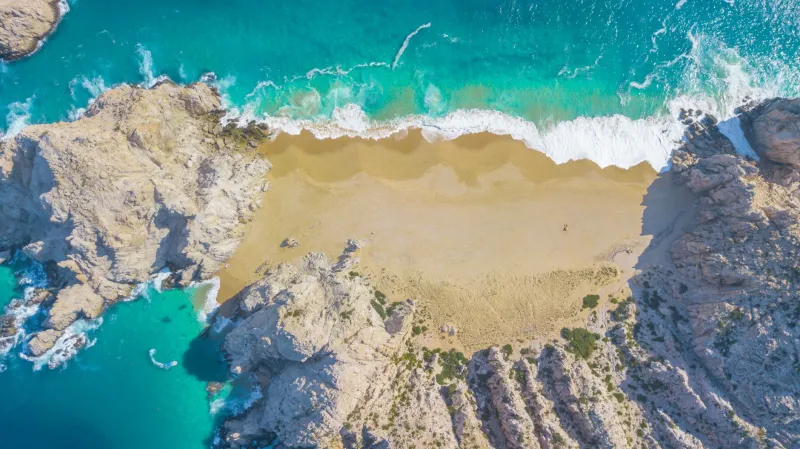
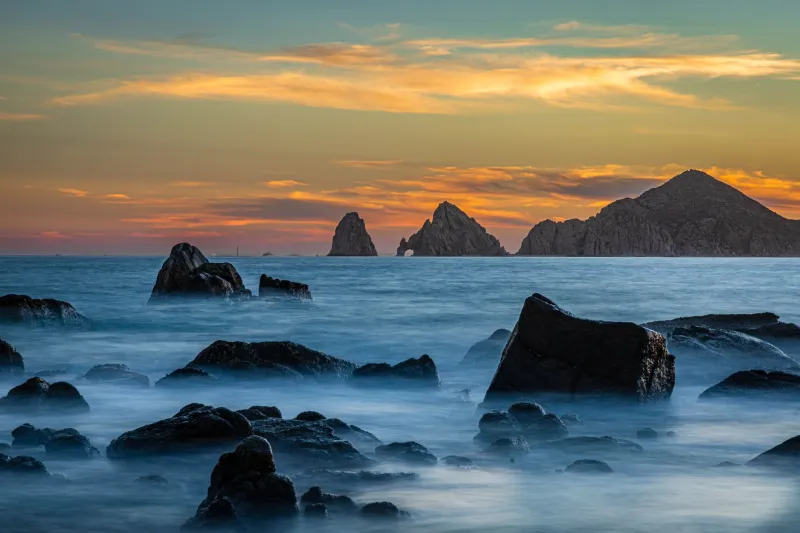
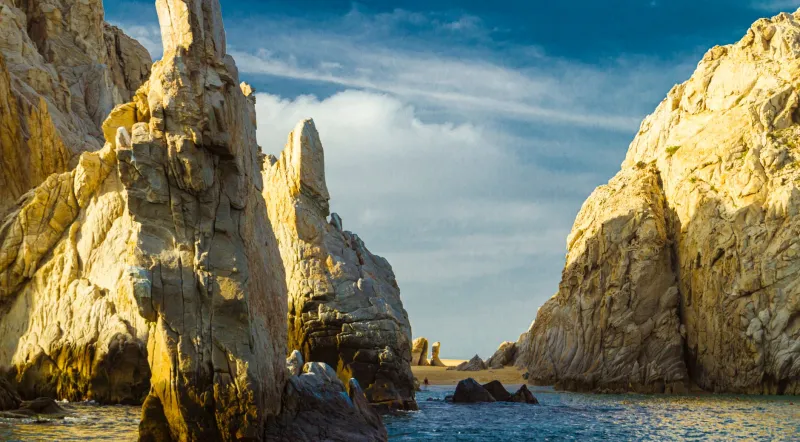
Cabo San Lucas sits at the southern tip of Baja California, where the Sonoran Desert drops straight into the Sea of Cortez. The landscape alone is disorienting in the best way — stark, beautiful, and impossible to own. You can't take it with you. You can only be in it.
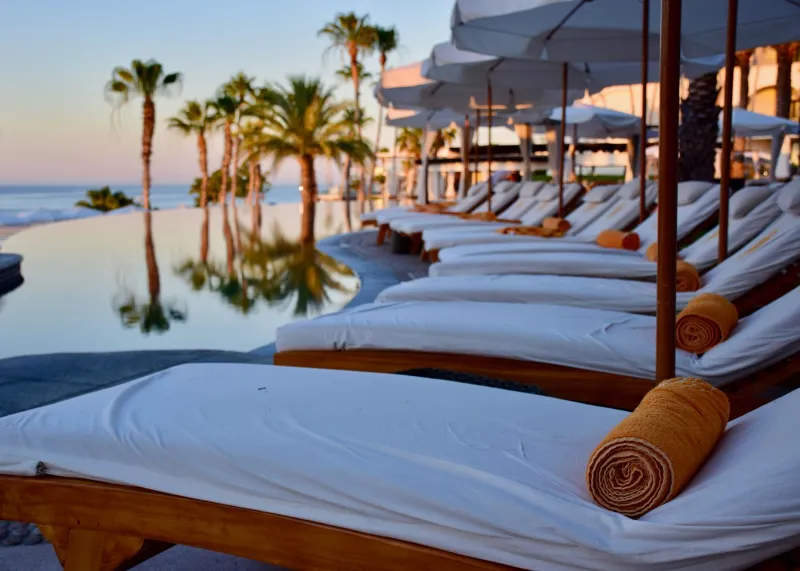
The luxury infrastructure here reflects that. World-class resorts like the One&Only Palmilla and Las Ventanas al Paraíso don't compete by loading you down with amenities you'll forget. They compete by creating experiences so immersive that your nervous system genuinely recalibrates. Swim-up bars at the edge of the Pacific. Private beachside dinners where the chef sources from the morning's catch. Spa treatments using local volcanic minerals that you've never heard of and can't replicate at home.
The point isn't acquisition. The point is presence.
And that distinction, it turns out, does something measurable to your brain.
What the Research Actually Says
Behavioral economists have been circling this territory for years. Dr. Thomas Gilovich, a psychology professor at Cornell, has published extensively on what he calls the "experience advantage" — the finding that experiential purchases deliver more lasting satisfaction than material ones. But his work goes further than that. He's found that high-quality experiences don't just feel better than stuff. They actively diminish the appeal of stuff afterward.
The mechanism is partly about memory. Experiences, especially vivid, novel ones, get encoded differently than object-based pleasures. A watch you bought five years ago has become invisible on your wrist. A morning you spent watching manta rays breach off Cabo's coastline is still sharp in your mind, still capable of generating something close to joy when you revisit it.
But there's a neurological layer too. When you're immersed in genuine luxury — the kind that's curated around sensation and place rather than status signaling — your brain's reward circuitry gets a serious workout. Dopamine floods in. And then, like any system that's been fully satisfied, it gets quieter. The low-grade hunger for the next purchase, the background hum of "I want," temporarily goes offline.
Repeat Cabo visitors describe this almost universally, even if they don't have the vocabulary for it.
Real People, Real Recalibration
Take Michelle, a marketing director from Austin who's made the trip four times in the last six years. "The first time I went, I was in a phase where I was spending a lot on things," she says. "Furniture, clothes, tech. I came back from Cabo and legitimately couldn't remember what I'd been so excited to buy. I just wanted to go back."
She's not alone. On travel forums and in conversations with repeat visitors, a pattern emerges: people come to Cabo chasing relaxation and leave with something more structurally disruptive to their spending habits. They start prioritizing experiences in their day-to-day lives. They book concerts instead of buying gadgets. They invest in cooking classes instead of kitchen equipment.
Dave, a financial advisor from Chicago who visits Cabo every January, puts it bluntly: "I stopped buying stuff I didn't need after my second trip. Not because I became some kind of monk, but because I'd tasted what actually felt good. Experiences. Real ones. The rest started feeling like filler."
Why Cabo Specifically Does This
This effect isn't unique to Cabo, but the destination has a few qualities that seem to amplify it.
First, the contrast is extreme. You're in the American Southwest desert heat one minute, and the next you're sitting at the edge of two oceans meeting — the Pacific and the Sea of Cortez — with a margarita in your hand and a pelican doing a low flyover. The environment doesn't let you be passive. It demands your attention in a way that a hotel pool in Scottsdale simply doesn't.
Second, the food culture here is genuinely irreplaceable. Cabo's dining scene has evolved dramatically over the past decade. Restaurants like Manta at The Cape and Cocina de Autor at Grand Velas Los Cabos are doing things with Baja seafood and local ingredients that you can't replicate at home, no matter what you spend at Whole Foods. When you eat something that exists only in that place, on that coast, made by those hands — it registers differently. It confirms, viscerally, that the best things can't be shipped to your door.
Third, the pace is genuinely different. The Baja sun slows everything down. Meals take longer. Evenings stretch. There's a cultural permission to be unproductive that Americans don't often give themselves. And in that space, you start noticing what you actually enjoy versus what you've been conditioned to pursue.
The Paradox, Unpacked
Here's the thing that seems contradictory on the surface: you spend real money to stay in a world-class resort, eat at restaurants that charge Manhattan prices for fish tacos (worth it, by the way), and access amenities that most people will never experience — and the result is that you want less.
But it's not actually a paradox once you understand the mechanism. Luxury, done right, isn't about accumulation. It's about quality of attention. When every element of your environment has been thoughtfully designed — the thread count, the view, the flavor profile of your mezcal cocktail — you start to understand, at a gut level, that more isn't better. Better is better.
And once you've felt that distinction, it's hard to go back to treating quantity as a substitute.
What You Bring Home
Most Cabo visitors return with a few bottles of local tequila, a piece of artisan jewelry from the Mercado Artesanal, maybe a sunburn they're slightly proud of. But the less visible souvenir — the recalibrated sense of what's worth wanting — tends to stick around longer than any of that.
If your spending habits feel a little autopilot lately, if you're buying things without quite knowing why, a week in Cabo might do more for your financial clarity than any budgeting app. Not because it's cheap. Because it's the opposite of cheap, and it reminds you what actually costs something worth paying.
Some places teach you what you want. Cabo has a way of teaching you what you don't.