Why Cabo Keeps Handing You Back to Yourself
You've probably heard someone say it after a trip to Cabo. Maybe you've said it yourself. "I don't know what it is about that place, but I felt like me again." Not relaxed. Not rested. Yourself. There's a difference, and it's worth unpacking.
Because here's the thing — plenty of destinations offer relaxation. A cabin in Vermont, a resort in Cancún, a long weekend in Palm Springs. But Cabo keeps generating something more specific: a kind of psychological unlocking that travelers describe with unusual consistency. The place has a reputation for clarity. For decisions made. For things finally said out loud.
So what's actually going on down there?
The Minimalism You Didn't Know You Needed
Start with the desert. The Baja Peninsula is stark in a way that hits differently than you expect when you step off the plane. Rust-colored mountains. Sparse, sun-bleached scrub. Giant cardón cacti standing alone against a blue sky so saturated it almost looks fake. There's very little visual clutter, and that matters more than most people realize.
Neuroscientists who study attention and cognitive load — the mental weight of processing everything in your environment — have found that cluttered, information-dense environments keep the brain in a low-grade state of vigilance. Cities do this to us constantly. So do our phones, our inboxes, our commutes. The brain never fully powers down because it never stops scanning.
The Baja landscape offers the opposite. It's vast, it's open, and it asks very little of your attention. That's not emptiness — it's space. And for a brain that's been running hot for months, that kind of space is neurologically significant. It's the cognitive equivalent of finally exhaling.
"When I got to Cabo the first time, I didn't realize how wound up I was until the desert sort of just... absorbed it," says Dana, a marketing director from Chicago who has returned to Cabo four times in six years. "By day two, I started thinking about things I hadn't let myself think about in months."
Where the Ocean Comes In
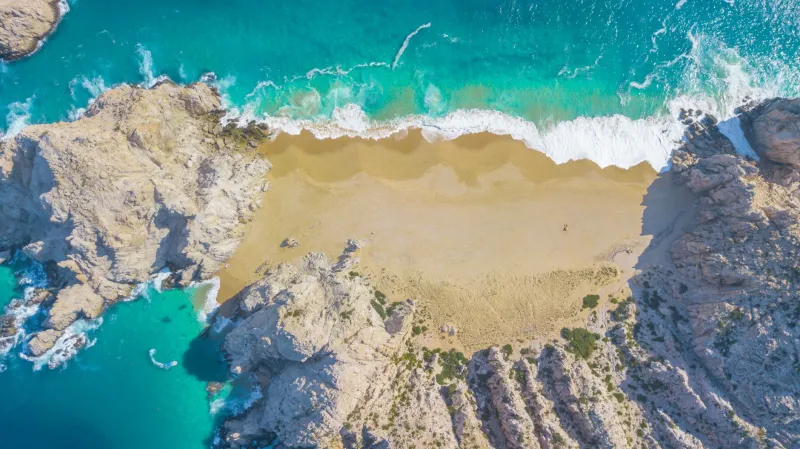
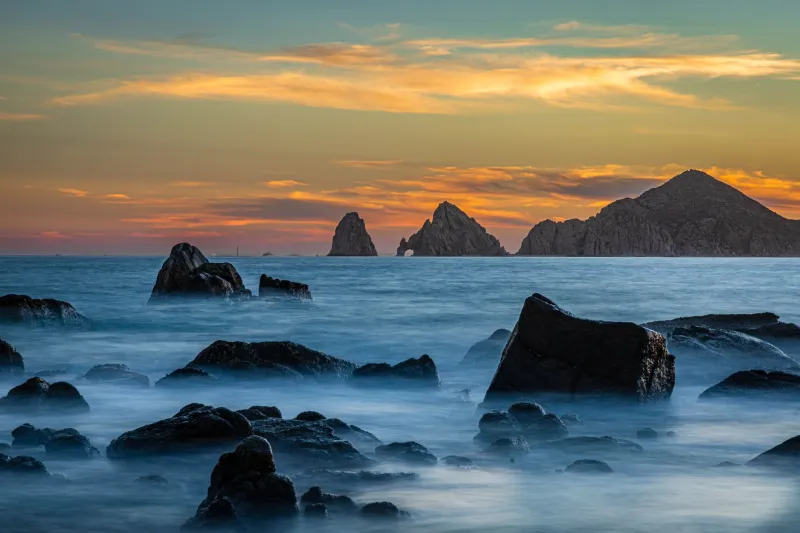
And then there's the Sea of Cortez on one side, the Pacific on the other, and Land's End sitting right in the middle of it all. The ocean isn't just pretty — it's doing something to your nervous system.
Research into what's sometimes called "blue space" — the psychological effect of being near large bodies of water — suggests that coastal environments reliably reduce cortisol levels and activate the parasympathetic nervous system, the part of you responsible for rest, digestion, and calm. The sound of waves, in particular, has been shown to slow brainwave activity in ways that mirror early-stage meditation.
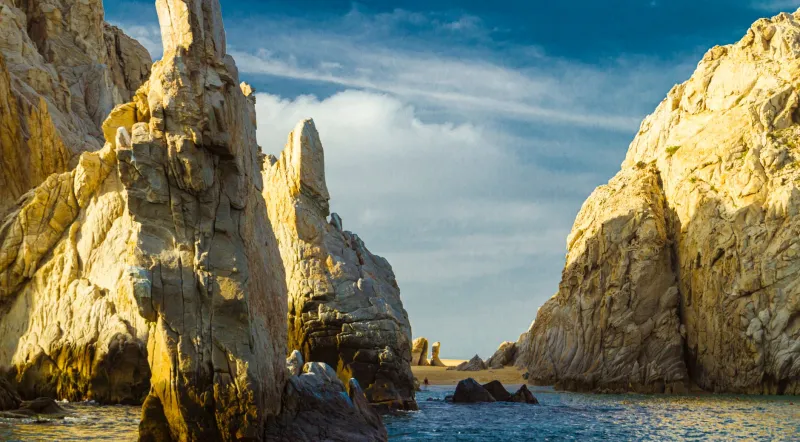
In Cabo, you're not just near water — you're surrounded by it in a way that's almost theatrical. The confluence of two different bodies of water at the tip of the Baja Peninsula creates a visual drama that's hard to find anywhere else. Something about being at the literal end of a landmass — the edge of the continent — has a psychological weight to it. It signals: you've arrived somewhere. This is a boundary. Things can be different here.
That feeling of threshold isn't just poetic. It may actually prime the brain for new thinking.
Culture That Asks You to Slow Down
Beyond the physical environment, there's the culture itself. Cabo's identity is a layered thing — part resort destination, sure, but underneath that is something genuinely rooted. The fishing village history. The mercados. The way locals move through the day with a rhythm that isn't hurried.
For Americans especially, stepping into a culture that doesn't organize itself around productivity is quietly radical. The US runs on urgency. We optimize, hustle, and schedule. In Cabo, a long lunch isn't inefficiency — it's the point. A conversation with a stranger isn't a detour — it's the afternoon.
That cultural permission to slow down has a compounding effect. When you stop performing busyness, you start noticing things. What you actually enjoy. What you've been avoiding. What you want.
"I made the decision to leave my job on a Tuesday morning sitting on the beach in Cabo," says Marcus, a former finance professional from New York who now runs a small sailing charter out of La Paz. "I'd been circling that decision for two years. Something about being there just made it obvious. Like the noise finally cleared."
He's not alone. Repeat visitors to Cabo describe it with striking regularity: the place has a way of surfacing things.
The Paradox Explained
So here's the Cabo paradox in plain terms. The farther you travel from your daily context — your apartment, your routines, your roles — the more clearly you can see yourself. Distance from your environment is distance from the version of yourself that environment keeps reinforcing.
Cabo accelerates this process because it stacks the conditions so effectively. The sensory simplicity of the desert quiets the noise. The ocean physically calms the nervous system. The culture gives you permission to be present rather than productive. And the sheer beauty of the place — the golden light, the dramatic geography, the warmth — keeps you in your body rather than your head.
That combination is rare. It's not something you engineer easily. And it may explain why people don't just vacation in Cabo — they return to it, sometimes for years, sometimes for decades, because they know what it gives them.
What to Do With That Feeling
If you're heading to Cabo and you want to actually lean into this effect rather than just stumble across it, a few things help.
Give yourself at least one morning with no plan. Not a yoga class, not a snorkeling tour — genuinely nothing. Sit with the desert or the water and let your brain do what it does when you stop directing it.
Walk somewhere you haven't been. The neighborhoods just beyond the marina, the side streets near the mercado, the quieter stretches of beach past the main tourist corridor. New environments generate new thinking.
And talk to people — not other tourists necessarily, but locals, guides, the woman running the taco cart on the corner. Cabo's people carry a warmth and groundedness that's contagious in the best way. Conversations here tend to go somewhere real, faster than you'd expect.
Cabo will meet you where you are. It usually does. But it tends to leave you somewhere better.